
血战太平洋
Tech exchange drives China-Cambodia industrial cooperation at Phnom Penh machinery show_我的网站

一 |
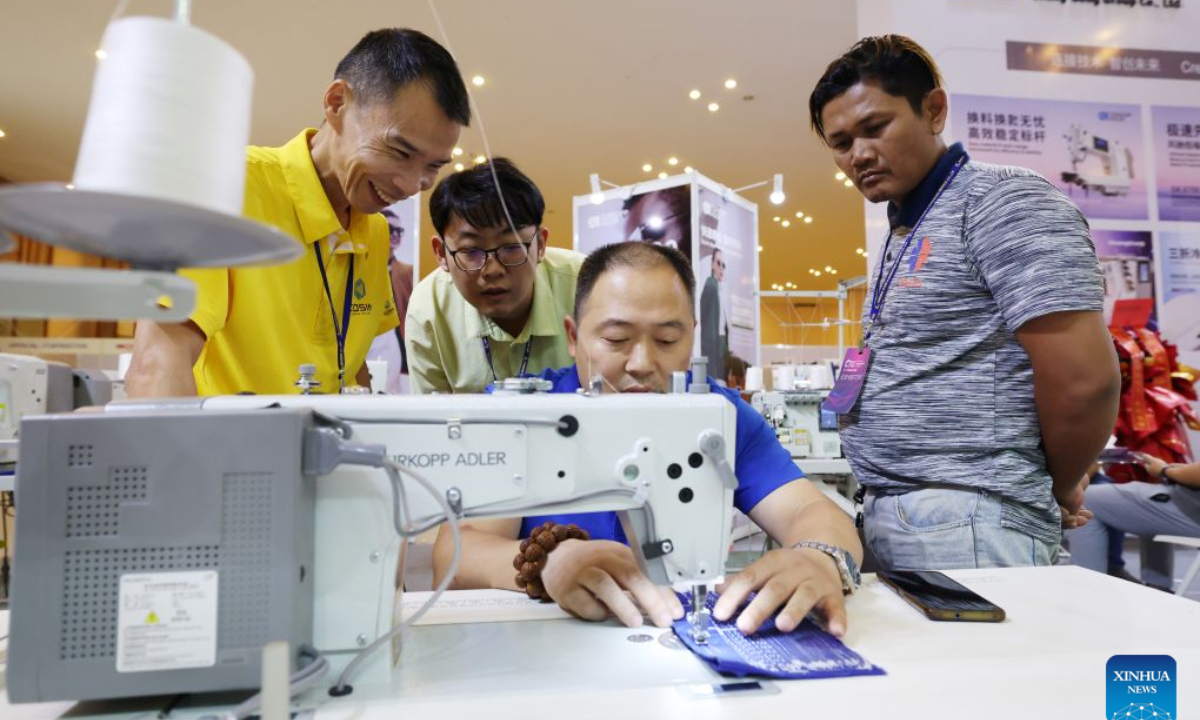
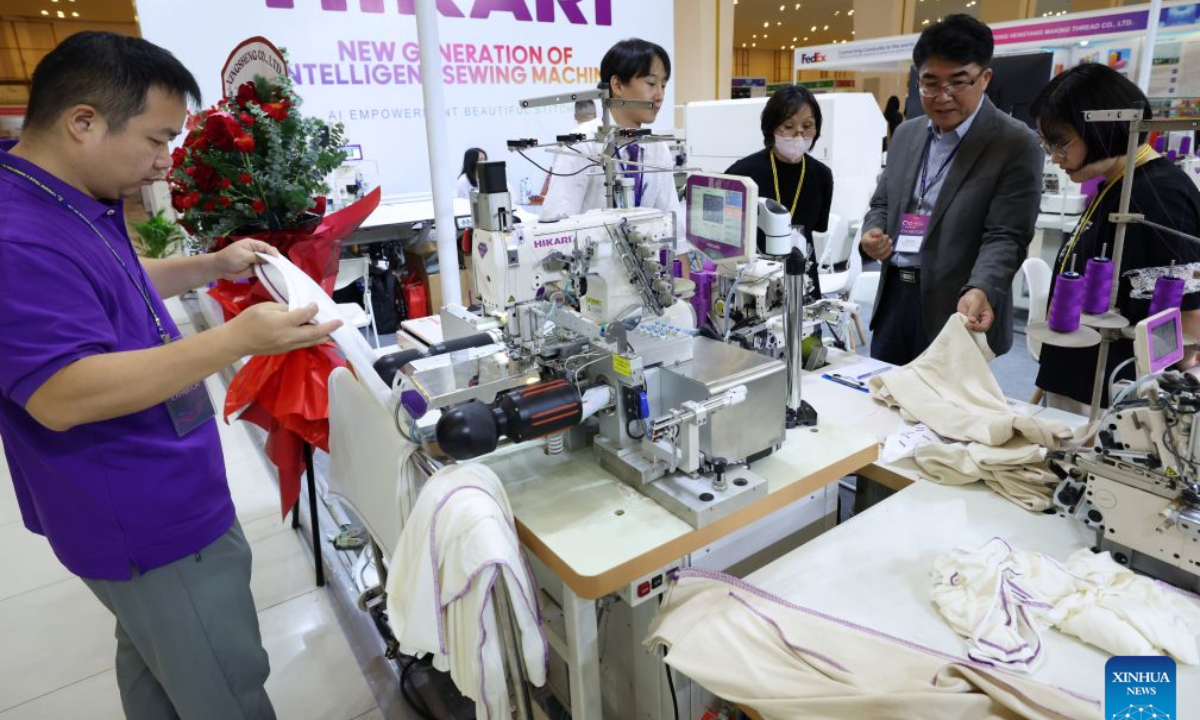
The four-day expo, which runs from Thursday to Sunday, features more than 200 local and international exhibitors.
A significant portion of these participants comprises Chinese companies across four core sectors: machinery and automation, textiles and garments, plastics and rubber, and printing and packaging.
Organized by Yorkers Trade & Marketing Service Co., Ltd. in collaboration with the Ministry of Industry, Science, Technology & Innovation, the expo provided a platform to showcase emerging industrial technologies, foster business connections and support the modernization of Cambodia's manufacturing sector.
According to official ministry data, Cambodia had 3,357 operational factories as of July 2026. These facilities employ over 1.35 million workers, more than 70 percent of whom are women.
Total factory investment in the kingdom reached approximately 28 billion U.S. dollars, a 29 percent increase compared to the same period in 2025. Additionally, industrial production during the first half of 2026 was valued at over 9.8 billion dollars, including roughly 7.3 billion dollars in goods manufactured for export.
Cambodian Minister of Industry, Science, Technology and Innovation Hem Vanndy urged Cambodian enterprises to embrace advanced technologies to boost productivity, improve quality, and sharpen their competitive edge.
"Artificial intelligence, production-line automation, robotics, digital technologies and smart manufacturing are increasingly determining the competitiveness of nations," he said during the expo's opening ceremony on Thursday.
"Cambodia cannot remain outside this transformation," Vanndy said. "We must embrace new technologies to increase productivity, reduce costs, improve product quality and strengthen the competitiveness of our enterprises."
Chim Vinly, the expo's organizing staff member, said the exhibition plays a vital role in introducing innovative manufacturing technologies to Cambodia's garment sector, as attendees can explore a diverse range of advanced machinery designed to elevate production standards.
"Most exhibitors represent the textile and garment industries, with the majority being local and Chinese companies," he told Xinhua on Saturday.
"These advanced manufacturing tools have boosted productivity and modernized local production chains. In particular, they make work faster and more efficient," he added.
Vinly said the annual event plays a vital role in further expanding bilateral trade between China and Cambodia.
"Chinese investment is crucial to boosting Cambodia's economic growth and generating job opportunities for the local workforce," he said.
Bo Seyma, a mechanic at Kosin Sewing Machine Co., Ltd., which supplies Cambodian factories with equipment from the Shanghai-based Shang Gong Group, said the expo is vital for showcasing cutting-edge machinery to the local garment industry.
He said the Kosin company is promoting sewing, embroidery, button, and backstitching machines, along with other equipment, to factories in Cambodia.
"These industrial machines are in high demand, with numerous factories placing purchase orders with our company," he told Xinhua on Saturday.
Seyma said these advanced machines are high-quality and built to last.
"These machines accelerate production efficiency while effortlessly meeting customer demands," he said.
Thong Mengdavid, deputy director at the China-ASEAN Studies Center of the Cambodia University of Technology and Science, said that Cambodia, a country heavily dependent on textiles and garments, has seen its cooperation with China evolve from providing raw materials like fabrics and finished consumer goods toward technological cross-pollination.
This allows local Cambodian plant managers and entrepreneurs to evaluate high-grade machinery directly, he added.
"Integrating China's technology, machinery, and tools into Cambodian factories will address several challenges in the local economy, such as enhancing output per hour, reducing material waste caused by human error, and fostering skill development among the workforce," Mengdavid said.
。 8 月 26 日消息,科技媒体 NeoWin 昨日(8 月 25 日)发布博文,报道称安全研究员 Xusheng Li 通过逆向分析,发现微软画图(Paint)和微软照片(Photos)会把 GDID 标识符嵌入到 AI 生成的图片中。注:GDID 最早于今年 7 月报道,在针对 19 岁黑客的 39 页联邦起诉书,指出微软承认在 Windows 11 系统中,内置全局设备标识符(Global Device Identifier,简称 GDID),且没有完整关闭选项。全局设备标识符是微软用于识别某次 Windows 安装实例的持久设备级标识,可关联实体设备或虚拟机,并在部分微软服务中作为统一识别键使用。典型场景包括设备目录登记、跨设备服务协同、更新分发与企业级状态上报。GDID 以 128 位数值(128-bit value)占用 16 字节(bytes),在微软画图和照片的相关功能中,微软服务器似乎会为提示词分配这类标识符。即使 Copilot 在本地生成图片,用户输入的提示词仍可能先发送至微软服务器。Li 分析微软画图应用的 AI 功能时,发现了 Watermarker.dll 组件。画图本身已经提供可见水印选项,可以在生成图片上添加小型 Copilot 标志;但研究员发现,另一套隐藏水印功能独立于该选项运行。研究还称,微软会把 C2PA 内容认证(C2PA Content Credentials)添加到 AI 生成图片中。李旭升发现,同一个 watermarkId 也会出现在 C2PA 元数据中,作为一种“软绑定”值,用于关联图片像素中的隐藏水印与图片来源元数据。微软照片也包含 Watermarker.dll。研究员发现,照片中的本地 Image Creator 和 Restyle Image 功能似乎同样会向生成图片嵌入 GDID。相关阅读:。
Current article:http://7ru.cuancuguanzhongnieqinyazhun.cyou/kre/3pbul.html
Published on:21:10:41
相关新闻
- 平野紫耀「プライベート店訪問」インスタ投稿削除にファンショック “机オークション騒動”後には意味深発言も
- 反超GPT!8月文生图榜单出炉 国产模型拿下全球第一
- Justice DY Chandrachud to be next CJI
- 青海海东市发现2名核酸检测阳性人员
- 抽废料 炼黄金!超爽解压增量《吸吸吸有限公司》明日发售!
- 市消保委消费教育快闪车“开”进武林夜市
- 近六成公司半年报净利增长,401家拟实施中期分红
- 集齐3名状元!鲁媒:王岚嵚与山东男篮签下的是一份长达4年的合同
- 国民党民代陈雪生遭突击搜查 其胞弟等人被带走 带队检察官今年2月曾搜查高金素梅
- Pecker on a Plane: Man Airdrops D*** Pic to Fellow Passengers, Gets Arrested
最后更新
热门新闻
- 嫦娥五号月壤矿物中,我国科学家发现了......_嫦娥五号月壤中发现存在高含量水_分析
- 现在可以在 DoorDash 上购买数字版游戏了
- 西双版纳1-7月标准天然橡胶累计加工51.6万吨
- 辽宁省组团参展中国文化旅游产业博览会
- 从岛内热捧大陆电影到两岸影业深度交流:“光影同舟”前景无限!
- 郑钦文输得不冤,21岁菲律宾新星强势夺冠
- Vicky Kaushal Praises Ranveer Singh’s Dhurandhar, Credits Aditya Dhar for The Spark
- Two Women Killed in Shark Attack Off Egypt's Red Sea Coast – Ministry of Environment
- 东风汽车朱勋:香港是海外业务的“跳板”,2025在港推三款新车
- 苹果客服回应“发现石油”触发定位 任何操作都有可能会触发